Since November 2006 an international project “Systems Biology Tools Development for Cell Therapy and Drug Development– SYSTHER” is underway at National Institute of Biology


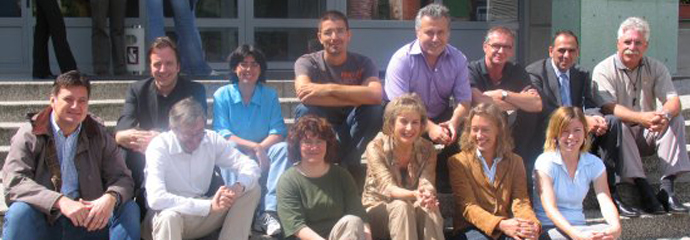
Slovenian Ministry of Higher Education, Science and Technology together with German Federal Ministry of Education and Research started to co-finance Slovenian-German virtual institute that is working in the field of medical biotechnology in November 2006. Virtual institute is actually a five-year project “Systems Biology Tools Development for Cell Therapy and Drug Development” – SYSTHER within the INREMOS program (Industrially Relevant Molecular Life).
Within SYSTHER there are several partners working closely together: National Institute of Biology and Blood Transfusion Centre from Slovenia and University of Potsdam (Institute of Biochemistry and Biology), Humboldt-University Berlin (Junior Research Group Systems Immunology, Institute for Theoretical Biology), Ludwig-Maximilian-University of Munich (University Clinic for Neurosurgery Großhadern) and MicroDiscovery GmbH from Germany.
The research fields of SYSTHER are human stem cells, cancer cells and their interaction. In parallel a clinical study on an alternative cancer treatment based on cell therapy is underway. A systems biology approach will be applied to these research fields, meaning that several levels of a biological system will be analysed (transcriptome, proteome, metabolome). Tools for efficient data processing, integration of different types of data and data management are also being developed.
In addition to science important activities in SYSTHER are progressing toward directions of commercializations of ideas and knowledge that is being acquired during the project and which need to be disseminated to the scientific community and general public. In this regard a two-day workshop on the subject of the latest trends in diagnosis and cancer treatment that was organised in November 2007 in Piran and a two-day workshop on the subject of entrepreneurship, intellectual property, marketing and financing of pharmaceutical and biotechnological companies was organised in November 2008 in Ljubljana. This year, for the second year in the row, an international postgraduate summer school will be organized at Marine Biological Station in Piran (MBP), dedicated to postgraduate students from the field of life sciences. This year’s topic will be “Stem cells and regenerative medicine” and will take place from 21st to 24th August 2009 at MBP in Piran, Slovenia .
Research results from SYSTHER have already been presented at German Symposium on Systems Biology 2009, Heidelberg in the form of a lecture and several posters. The next presentation of scientific achievements will be at “Joint Congress of Slovenian Biochemical Society and Slovenian Genetic Society Otočec 2009” in September 2009 at Otočec, Slovenia.
Activities and research work from the project were also presented during scientific seminars at NIB.
SYSTHER project was presented in Sobotna priloga in newspaper DELO on April 30the 2009. The article is available only in Slovenian language.
Research work
One of the research work areas within SYSTHER is the research of gene expression (transcriptome) in individual types of lymphocytes (Figure 1, Figure 2, Figure 3) isolated from healthy volunteers. This data are presenting a foundation for the clinical trial (cancer treatment). Additionally, transcriptome is being studied in human mesenchymal stem cells (Figure 4), in senescent mesenchymal stem cells (Figure 5) and transformed mesenchymal stem cells (Figure 6) isolated from bone marrow of healthy volunteers. This will enable us to characterize individual cell lines of stem cells and their applicability for use in therapy.
Gene expression of all known genes in human genome can be followed with DNA-microarrays. Large amount of gathered data needs to be inspected (Figure 7), normalized (Figure 8) and quality checked (Figure 9).
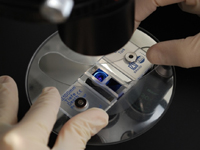
Slika 1 Slika 2 Slika 3
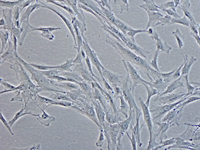
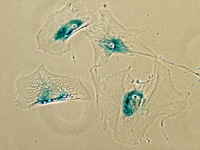
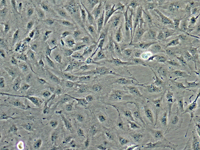
Slika 4 Slika 5 Slika 6
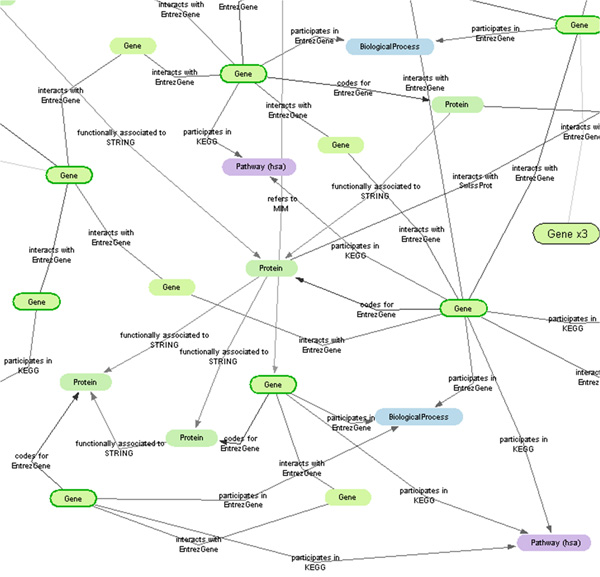
Only after these steps the data can be analysed in such a way that biological questions of hMSC quality and genome stability can be addressed. Resolving those issues shall provide us with the standards of safe use of human mesenchymal stem cells in cell-based therapies for treating diseases like cancer that cannot be cured efficiently with conventional medicine. One of the tools that helps us visualize the experimental data and connect them with already known biological knowledge is Biomine (Figure 10).
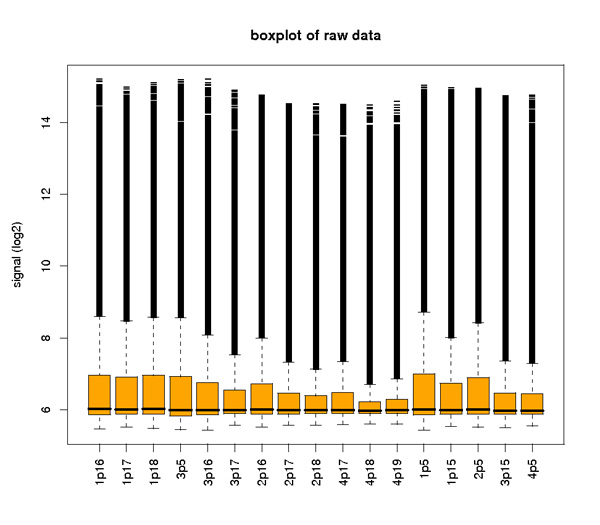
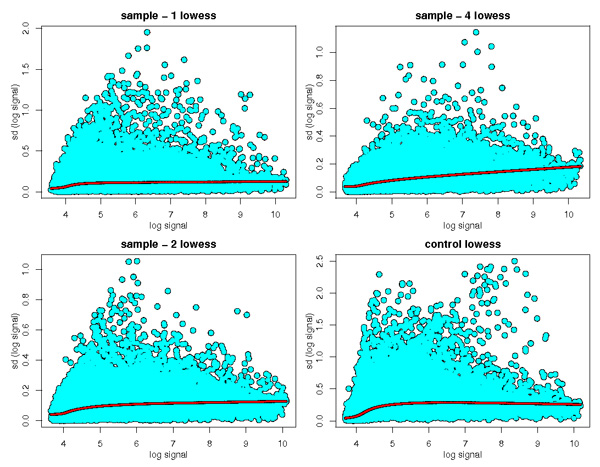
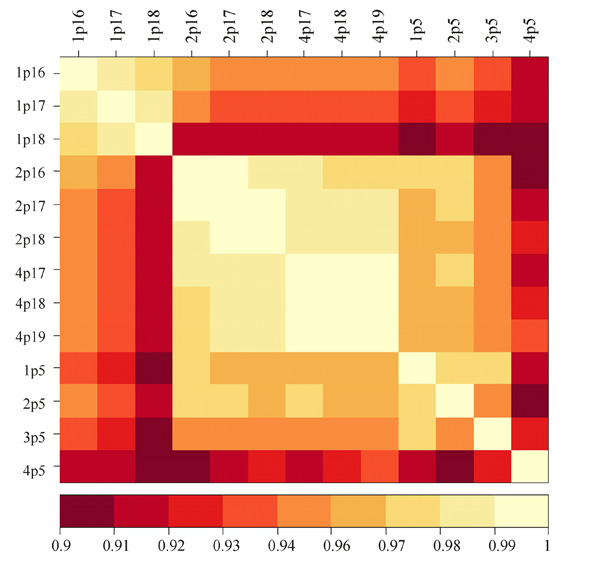
Slika 7 Slika 8 Slika 9